Challenge C: Substantive Post #1
For my review and Challenge C, I wanted to take up an Open Educational Resource that helped me jump start my Computer Science knowledge. That resource is Harvard’s CS50x: Introduction to Computer Science on edX. CS50x falls under the category of an Open Educational Resource because it uses the CC BY-NC-SA 4.0 License, which permits the sharing and adaptation for non-commercial purposes of the work used. Such an objective fits well within the purview of Open Educational Resources.
From an educational perspective, CS50x exemplifies thoughtful active-learning design. Each module blends lectures, short conceptual videos, and progressively challenging problem sets that reinforce learning through practice. This design reflects cognitive-load and dual-coding principles by combining visuals and explanations to strengthen understanding (Dual coding theory (Allan Paivio) 2018).
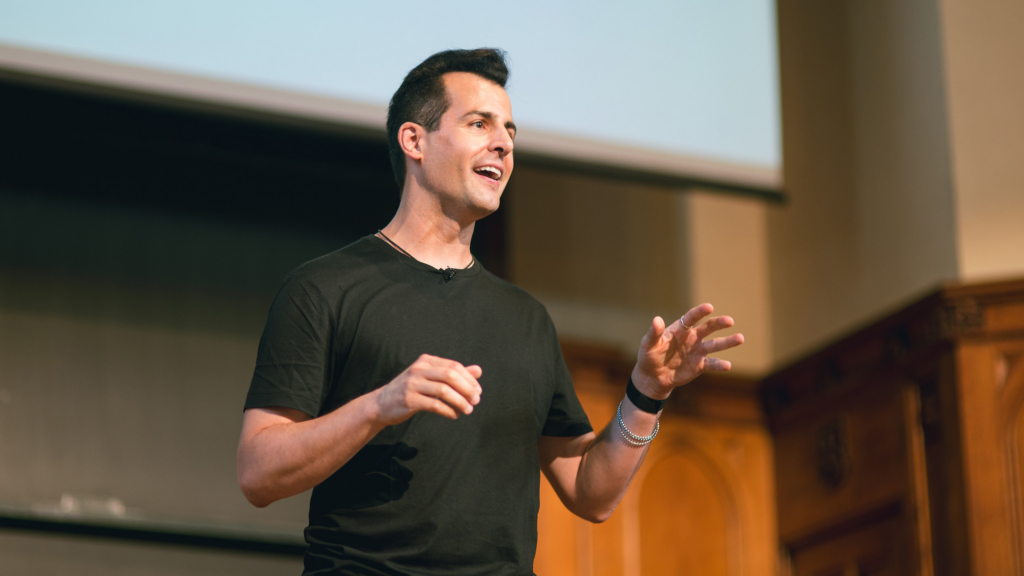
On the pedagogical level, the quality of the CS50x content makes it a great example of active learning practice. Each module features a combination of lectures, small conceptual videos, and incrementally increasing levels of problem sets designed to integrate the learned ideas within hours, not days, of learning the concept. Such module organization contributes to theories of cognitive-load management because the information learned is “chunked” and reinforced by practice as opposed to overloading the students’ minds (Dual coding theory (Allan Paivio) 2018). The live-coding lectures taught by David Malan demonstrate the concept of dual-coding theory, using both visuals and verbal explanation to strengthen understanding (Dual coding theory (Allan Paivio) 2018).
The nature of the course content provides the learners with a great deal of autonomy. Since the content is open and self-paced, I could access and revisit content based on the level of knowledge held on both Python and C programming languages. Such an aspect complies with the tenets of Universal Design for Learning, where there are various levels of engagement and representation (CAST).
However, the level of sophistication and the amount of content presented in CS50x could be intimidating for absolute novices, and the “non-commercial” provision marginally restricts the ways in which the content might be adapted for for-profit education contexts (“CS50 License”). By and large, it still functions as a best practice for implementing equity and quality in computer-science education through open, theory-based instructional approaches (“UNESCO Recommendation on Open Educational Resources”; Wiley).
Works Cited
“CS50 License.” CS50 — Harvard University, “CS50X 2025.” CS50x 2025, cs50.harvard.edu/x/license/
“UNESCO Recommendation on Open Educational Resources (OER).” UNESCO, 2019, https://www.unesco.org/en/legal-affairs/recommendation-open-educational-resources.
Last Updated November 30th, 2018 07:01 pm. “Dual Coding Theory (Allan Paivio).” InstructionalDesign.Org, 30 Nov. 2018, www.instructionaldesign.org/theories/dual-coding/.
Wiley, David. “The Access Compromise and the 5th R.” OpenContent Blog, 2014, https://opencontent.org/blog/archives/3221.
CAST. “Universal Design for Learning Guidelines.” CAST, 2022, https://udlguidelines.cast.org/.